
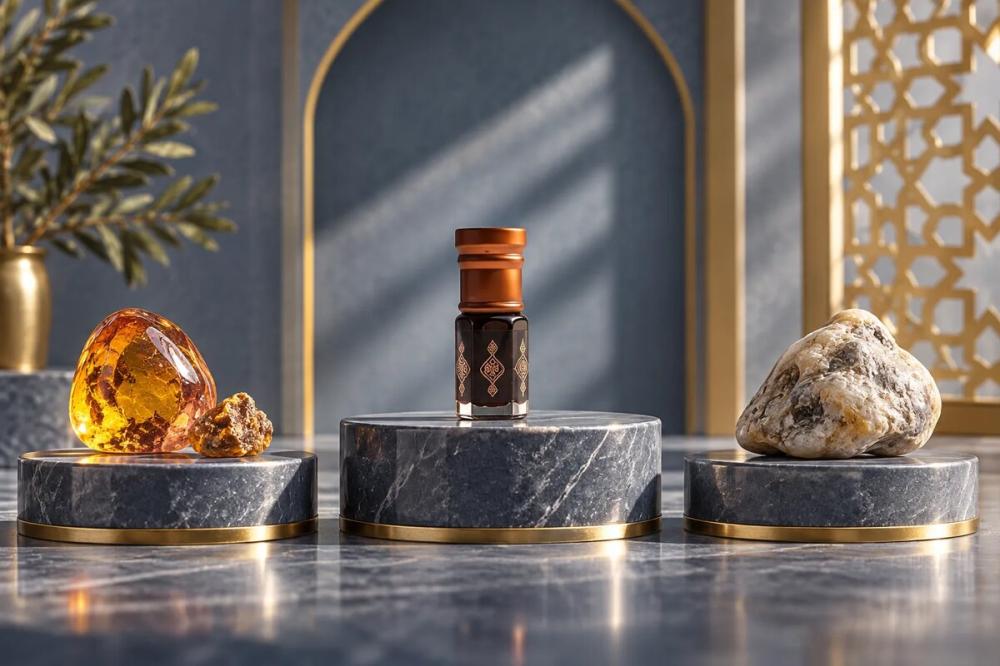
Amber on a perfume bottle does not automatically mean it contains natural ambergris, nor does it mean fossil amber used in jewellery has been dissolved into the formula. In perfumery, amber often describes a warm effect built from resinous, sweet, woody or balsamic impressions. Ambergris is a separate material associated with sperm whales, while fossil amber is ancient tree resin used in jewellery. Keeping the terms distinct makes a product description more useful.
Amber in perfumery
An amber accord is a compositional idea rather than a single mandatory ingredient. A perfumer can combine balsamic, resinous, sweet and woody effects to create styles ranging from soft and vanilla-like to dry, smoky or musky. Several perfume oils called amber may therefore smell quite different without sharing one fixed recipe.
Natural ambergris
Ambergris is a waxy material formed in the digestive system of sperm whales and has been found at sea or on shore. Its appearance and scent can change with environmental exposure. A finished product should not be described as containing it without relevant evidence. Read more about the distinction between a material and a bottled fragrance in our guide to ambergris oil.
Fossil amber in jewellery
The amber used in beads and jewellery is fossilised tree resin. It differs from both ambergris and a perfume amber accord in origin, formula and use. Do not heat, scratch or apply solvents to jewellery to investigate a supposed link with perfume; those actions can damage the piece without establishing its identity reliably.
Read an amber oil listing carefully
Look for a defined direction: sweet, resinous, smoky, woody, powdery, leathery or musky. Then establish whether it is a composed perfume oil or a declared individual material, and check volume, directions and warnings. If ambergris is mentioned, ask whether it is an inspired effect or a declared ingredient.
A trial that reveals the profile
Use a small amount on a labelled blotter and revisit it after the opening, around half an hour later and subsequently. Record whether sweetness dominates or woods and resinous impressions become clearer. Any skin or fabric use must follow the product's directions; sample separately and do not assume every surface is compatible.
Choose for the setting
A softer profile may suit everyday wear, while a deeper resinous or woody interpretation may appeal when you want a richer scent. Consider the people sharing your space and choose a comfortable amount. To explore oud alongside amber, begin with separate samples and let one lead. A large dose of both can obscure the details you wanted to enjoy.
What a helpful description provides
A useful amber oil description identifies the scent character, intended use and what can be substantiated about the formula. It distinguishes an accord from ambergris and fossil amber instead of using the ambiguity to imply rarity or special benefits.
Two different ways to explore amber
If your interest is fragrance, explore the scent description of Riyadh Spirit Amber and compare it with other amber fragrances. If you are choosing jewellery instead, focus on the stated material, bead size and construction of pieces such as yellow amber prayer beads. The shared word does not make these products interchangeable.
Common questions
Does every amber oil contain ambergris?
No. Amber may simply describe a warm scent accord. Natural ambergris content should not be assumed without an explicit supported claim.
The distinction to remember
Perfume amber is a constructed scent effect, ambergris is a different natural material, and fossil amber is tree resin used in jewellery. The better buying question is which meaning is intended and what details support the particular claim.
To build on this guide, read Choosing Amber Oil by Scent and Composition and Amber Accords and Their Warm Scent Character.
Background and supporting guidance: Natural History Museum explanation of ambergris. These sources do not certify individual store products.
Further reading
These references provide background information and do not certify the composition, origin or quality of an individual store product.