
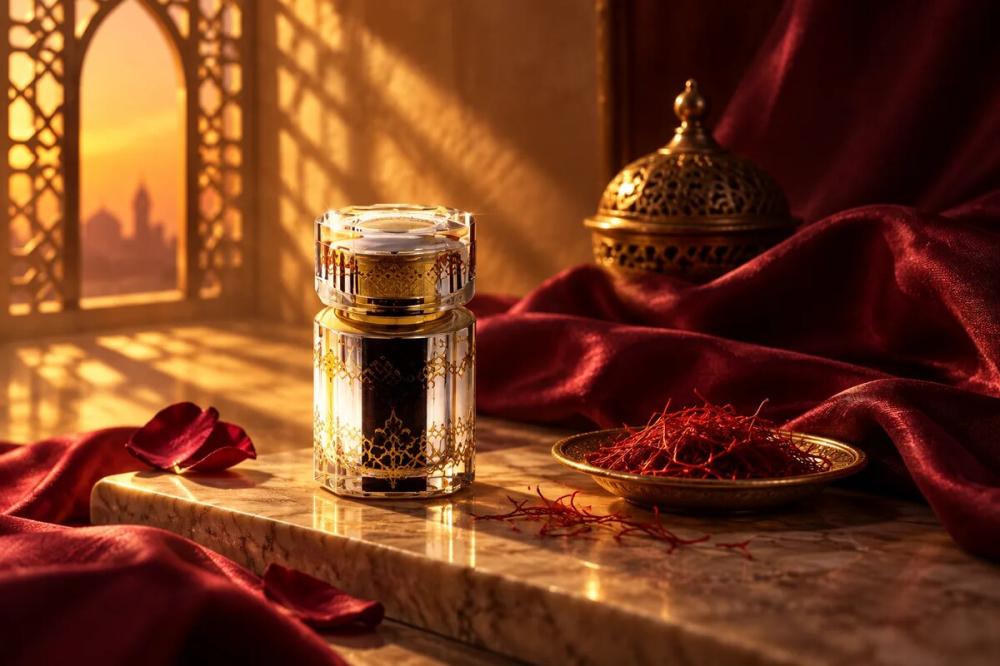
Saffron musk is not a single material or a standard recipe. It is a fragrance direction combining a musky base with saffron-inspired impressions that may feel dry, leathery, metallic, honeyed or warm. Its appeal can lie in the contrast between softness and spice. The name alone does not establish natural saffron, animal-derived musk or a particular concentration.
What the name means
It may describe a composition inspired by saffron rather than a product containing the natural spice. Ask what is explicitly declared for the finished formula. A notes list describes the intended scent impression and is not a complete ingredient list.
Four possible scent directions
Some interpretations are soft and powdery, others dry and leathery, sweet and ambery, or woody and spicy. These are practical comparison categories rather than a fixed classification. Read the description of the actual product and confirm it in a sample.
How to try saffron musk
Begin with a small amount on a labelled blotter to observe the structure. Only then consider a separate trial on intact external skin if the directions permit it. Do not place it over an existing strong perfume or use several new fragrances at once.
Start with restraint
A saffron-inspired accent can seem sharp at a high dose. Use the smallest practical amount, allow it to settle and reassess before adding more. More perfume does not prove better quality or create a guaranteed increase in wear time.
Pairing with other fragrances
Warm woods or a softer amber may complement some saffron musks. Assess separate samples first. With a strong oud, let one fragrance lead and the other provide an accent; do not mix the contents of the bottles.
Who might enjoy it
It may appeal if you like a musky base with more spice or a light leathery contrast rather than a purely soapy effect. If you dislike dryness, pronounced sweetness or strong projection, use those dislikes to narrow the product descriptions before sampling.
How to tell the four directions apart
In a powdery interpretation, notice whether the musky base leads and spice remains a warm detail. In a leathery one, assess whether the dryness is comfortable after the opening settles. In a sweet ambery style, ask whether sweetness balances or hides the spice. In a woody version, observe whether the wood stays clear without losing softness. Record the direction you enjoy, not the one with the grandest name.
A short sampling record
Record the sample name, date, applicator and approximate amount. Revisit it after roughly five minutes, half an hour and later, noting sweetness, dryness, sharpness and the remaining musky effect. These are convenient checkpoints, not mandatory stages for every formula. If the scent is no longer detectable, record that instead of adding more and changing the trial.
Choose the bottle after the sample
Set the purpose before choosing the size: regular wear, an occasion or a gift. Compare format, volume, declared information and applicable return terms, and ask whether the sample represents the offered batch. A higher price does not establish more natural saffron, and soft does not mean allergy-free. For a gift, knowing the recipient’s preference for sweetness or dryness helps more than choosing the strongest scent.
Responsible use and storage
Follow the label for application and amount. Avoid the eyes, mucous membranes and irritated skin, and never use the perfume internally. Stop and gently wash the area if irritation occurs; seek professional advice for persistent symptoms or a known allergy. A small trial is not medical patch testing. Keep the bottle closed, away from sun, heat and cars, and maintain a clean applicator without introducing water. Do not transfer claims about edible or raw saffron to a perfume bearing its name.
Frequently asked questions
Does it always contain natural saffron?
No. The name may describe an inspired effect. Natural-content claims need specific product information.
Does a golden or reddish colour reveal the formula?
No. Colour alone does not establish saffron content, concentration or quality.
What is a useful first trial?
A small labelled blotter sample, revisited over time, followed by permitted skin use only when appropriate to your circumstances.
Explore saffron musk at OUDNNA
If you enjoy warm musky scents, explore OUDNNA’s Saffron Musk and compare its current description with your sampling notes. Browse the musk oil collection if you would like to compare other scent styles before choosing a bottle.
A considered choice
Choose saffron musk for a balance you enjoy between softness, spice, dryness and warmth. A clear product description and an unhurried trial are more useful than the value of the raw spice or unsupported claims about benefits.
References
FDA on fragrance ingredients and sensitivity
https://www.fda.gov/cosmetics/cosmetic-ingredients/fragrances-cosmetics
FDA on fragrance and therapeutic claims
https://www.fda.gov/cosmetics/cosmetic-products/aromatherapy